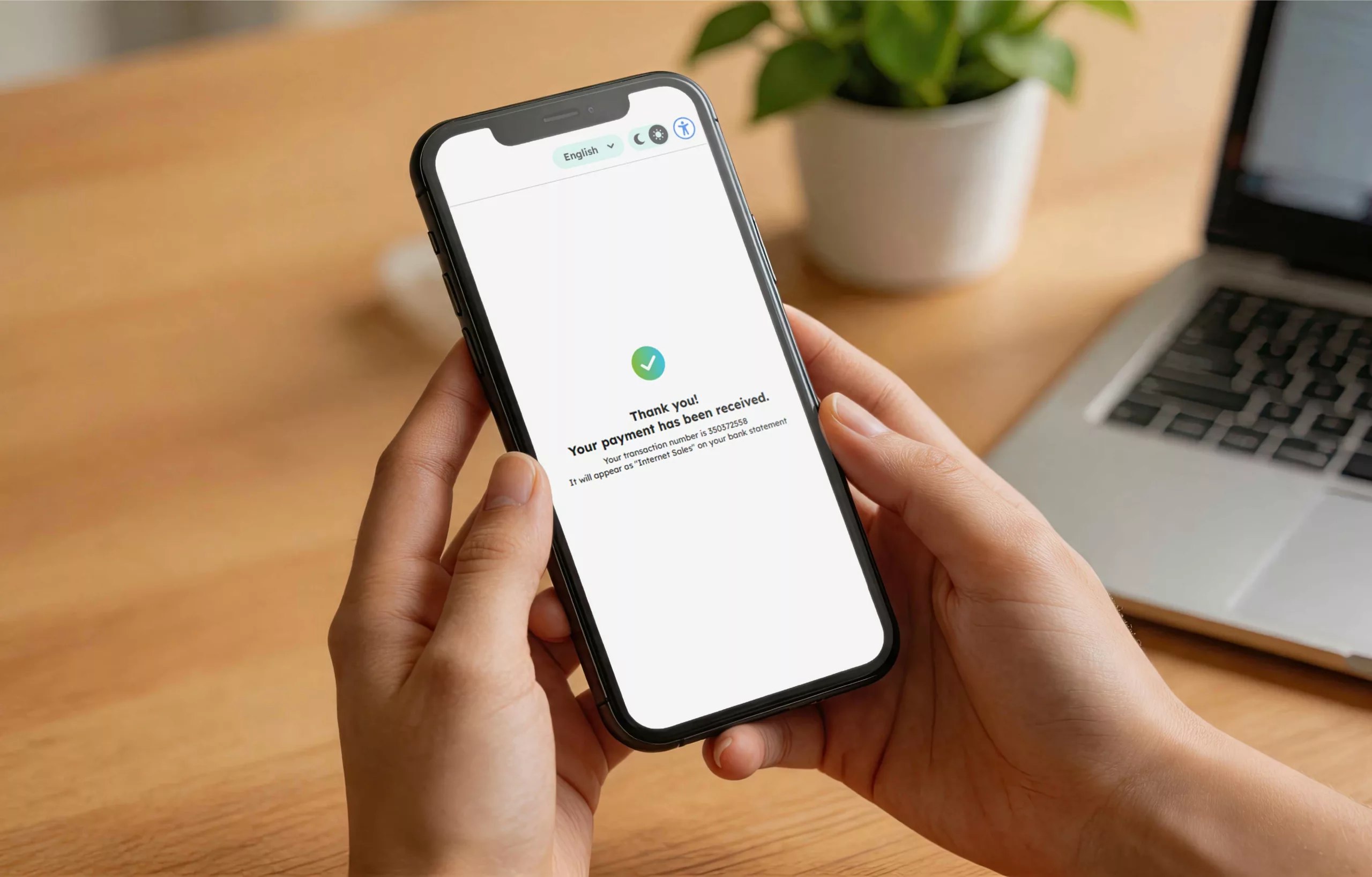


Trust is a decisive factor in online payments. For customers, it means feeling confident that their data is protected and their payment will be processed securely. For merchants, it means meeting regulatory obligations while keeping checkout journeys smooth and efficient.
In Europe, online payments sit at the intersection of security frameworks, regulatory compliance and user experience (UX). Requirements like Strong Customer Authentication (SCA), PCI DSS compliance and fraud prevention controls are designed to protect consumers, yet, if poorly implemented, they can introduce friction at checkout.
Explore how security and compliance can coexist with good UX, and how merchants can build trust without compromising conversion.
Why trust matters at the online checkout?
Online payments are often the final step before purchase completion and one of the most sensitive moments in the customer journey.
Industry research consistently shows that customers expect strong security, but not at the expense of usability. According to European payments research, safety and security are the top priorities for both consumers and merchants, outweighing speed or cost considerations in many cases.
At the same time, checkout friction remains a known challenge. Baymard Institute conducted checkout UX audits for more than 150 leading e-commerce sites discovering that the design and flow of the checkouts are frequently the main cause for customers leaving the purchase midway through the checkout process.
The challenge for merchants is therefore not choosing between security and UX but ensuring that both work together.
Security and regulatory compliance: the cornerstones of trust
PCI DSS: protecting payment data
The Payment Card Industry Data Security Standard (PCI DSS) is a global framework designed to protect cardholder data. Any organisation that stores, processes or transmits card data must comply with its requirements.
PCI DSS focuses on:
- Secure networks and encrypted data transmission.
- Controlled access to sensitive information.
- Continuous monitoring and testing of systems.
From a customer perspective, PCI DSS is largely invisible, yet it forms a foundational layer of trust. When merchants rely on compliant payment infrastructures and tokenisation, customers can enter their details knowing that data is handled according to recognised security standards.
In parallel, payment flows often involve personal data (guest identity, contact details, receipts and booking references), so merchants and providers must also ensure GDPR‑compliant data handling and retention practices.
Strong Customer Authentication and 3D Secure
In Europe, Strong Customer Authentication (SCA) is a regulatory requirement under PSD2 for most electronic payments. For card transactions, SCA is typically implemented via 3D Secure (3DS).
Earlier versions of 3DS were often associated with poor UX. However, 3DS2 was designed specifically to reduce friction, using risk‑based authentication and mobile‑friendly flows. Low‑risk transactions may be authenticated without customer interaction, while higher‑risk payments trigger step‑up checks such as biometrics or one‑time passwords.
EU regulatory context
European payment regulation is designed to protect consumers while promoting a harmonised internal market. Key frameworks include:
- PSD2, which introduced SCA and enhanced consumer protections.
- The upcoming PSD3 and Payment Services Regulation (PSR), aimed at strengthening fraud prevention and standardising rules across Member States.
For merchants in France and Spain, compliance is not optional, but it does not need to be visible or disruptive to customers when handled correctly.
Reducing friction at checkout without weakening security
Security and compliance do not automatically lead to poor UX. Friction typically arises when systems are fragmented or poorly orchestrated.
Key principles that support both trust and conversion include:
- Risk‑based authentication: Apply SCA dynamically, triggering step‑up checks only when required. Use the best exemptions to optimise your frictionless rate.
- Tokenisation and stored credentials: Reduce repeated data entry for returning customers while keeping sensitive data protected.
- Consistent checkout design: Ensure authentication steps are clearly branded and predictable, reducing confusion and drop‑off.
- Payment orchestration: Managing multiple payment methods and security flows through a single integration can reduce technical complexity and improve consistency across markets.
Building customer trust in online payments is not about adding more steps at checkout. It is about embedding security and compliance in a way that feels natural, consistent and reassuring.
In European markets such as France and Spain, merchants that align regulatory obligations with thoughtful UX design are better positioned to create payment journeys that customers recognise as both safe and easy to use.
Payment infrastructure can support secure, compliant and user‑friendly checkout experiences across European markets. Contact one of our experts to know more.